Process Tanks

Stainless Steel Process Tanks | Mixing, Thermal Control and Sanitary Operation

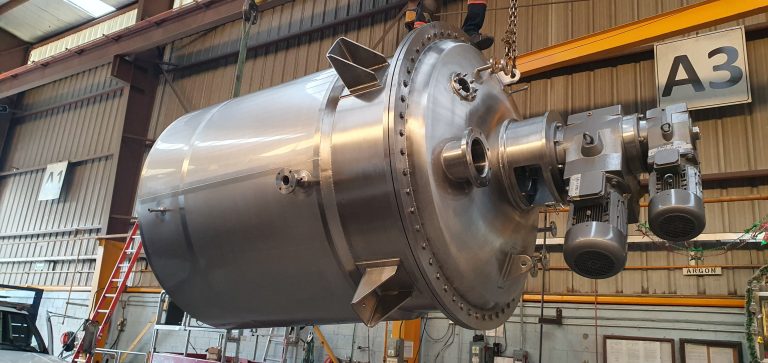
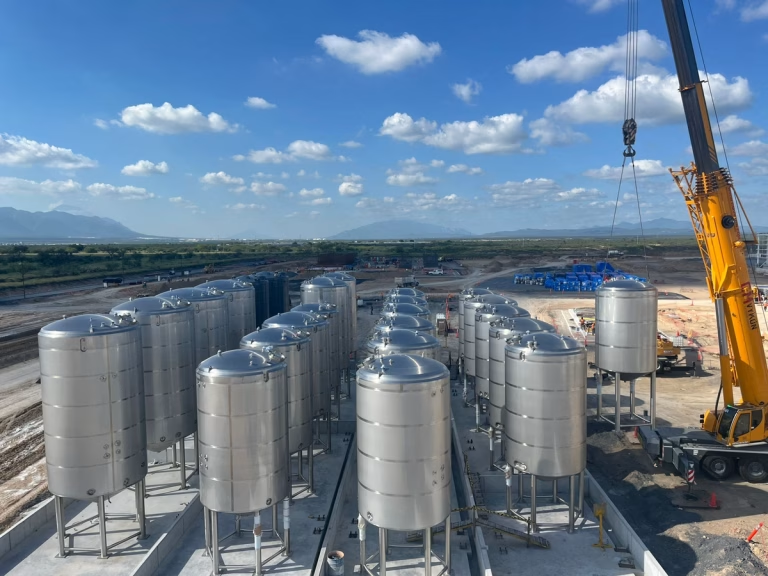
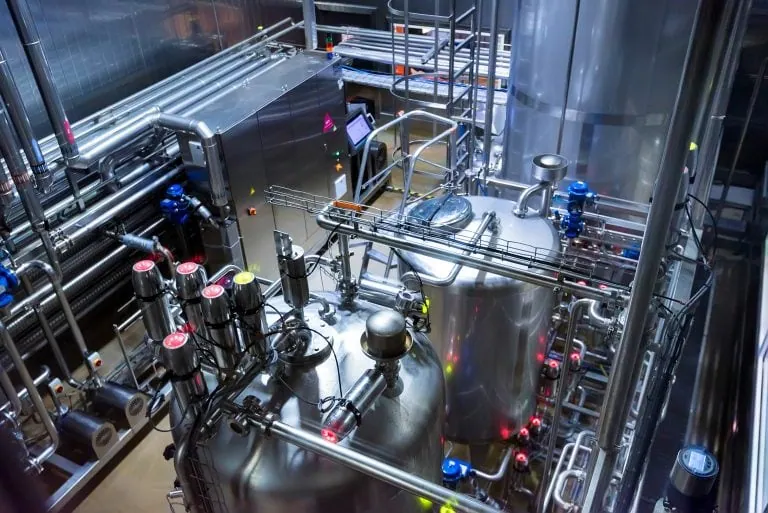
Falco process tanks are designed for operations where the product requires mixing, heating, cooling, maturation, or continuous sanitary control. Manufactured from food-grade, chemical, or pharmaceutical-grade stainless steel, they offer stability, safety, and consistent performance in high-demand production lines.

Thanks to over 30 years of experience and our manufacturing under ASME standards, we produce fully customized tanks that adapt to the type of product, viscosity, temperature, flow rate and regulatory requirements of each industry.

Main features

Stirring options

Marine propeller

(If applicable according to the process)

It generates a strong and efficient axial flow, ideal for mixing low to medium viscosity liquids inside the tank without creating dead zones.

Axial or radial flow turbine

Axial motion moves the product vertically to homogenize and keep solids in suspension; radial motion disperses energy to the sides, useful for more intense reactions or mixtures.

Perimeter anchor with scrapers

Slow agitator that sweeps the tank walls, preventing the product from sticking or burning, perfect for viscous or temperature-sensitive formulations.

High shear mixers

They cut, disperse, or emulsify ingredients quickly within the tank. Ideal for creams, cosmetics, adhesives, or stable emulsions.

Dual systems (propeller + anchor)

They combine rapid mixing in the center with scraping on the walls, allowing the processing of complex or multi-phase products without losing uniformity.

Sanitary or industrial mechanical seals

They prevent leaks from the agitator shaft. Sanitary versions are easy to clean (CIP/SIP), while industrial versions resist harsh chemicals and heavy workloads.


Fixed speed motors or motors with VFD

The stationary motor operates at a single speed; a VFD allows adjusting rpm according to the stage of the process, optimizing energy consumption and mixture quality.


Benefits

  • Homogeneous and stable mixture even in high viscosity products.
  • Efficient heat transfer to reduce processing times.
  • Sanitary surfaces that facilitate cleaning and CIP/SIP processes.
  • High durability due to certified materials and sanitary welding.
  • Full customization according to process, flow rate or required temperature.
  • Maximum operational safety and compliance with international standards.

Applications

  • Dairy products and beverages

  • Juices and concentrates

  • Foods and liquid bases

  • Pharmaceuticals and Biotechnology

  • Cosmetics and personal care

  • Controlled chemical processes

  • Mixtures, solutions and homogenizations

Types of process tanks

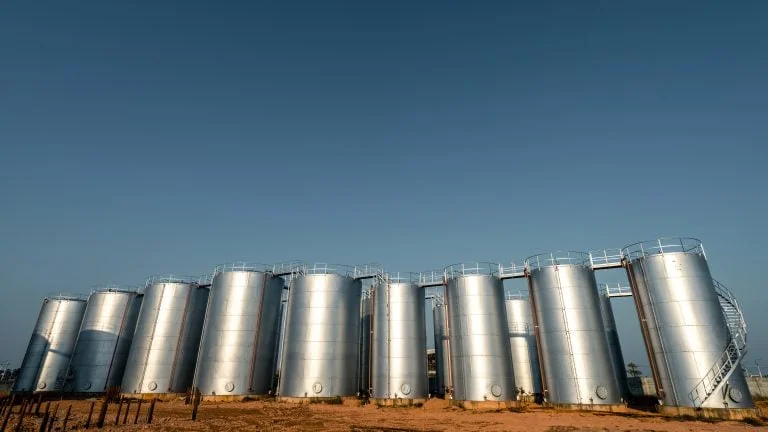
  • Designed to store liquids or solids (powders or pellets).
  • Made of 304 stainless steel, gauges from 14 to 11.
  • Primarily passive function (without agitation or special heating).
  • It is equipped with a jet-burner type burner for efficient gas heating.
  • Propeller type agitator for low density processes.
  • Ideal when a reliable and fast heat source is required.
  • Heating by means of submerged resistors (bain-marie) or electric jacket.
  • It allows for more precise temperature control, and is less aggressive than direct gas.
  • Suitable for sensitive processes where uniformity and thermal control are critical.
  • It uses steam as a heating medium, through a "dimple-jacket".
  • Anchor-type agitation system, especially for medium to high density products.
  • Widely used in the food and cosmetics industries where the product is denser.
  • Specifically designed for mixing powders or granules.
  • It uses a ribbon-type agitation system; a large outlet or tilting system to facilitate unloading.
  • Ideal for dry solids, granular mixes, dry foods, post-mixing.
  • Simple stirring by means of a propeller or helix, without a heating system.
  • For low density products, mixing, dissolving or homogenizing without thermal variation.
  • Used in the food or chemical industries where only mixing is required.
  • It is equipped with three independent stirring systems (high, medium and low speed).
  • It allows adaptation to complex processes that require different mixing speeds.
  • Ideal for the food or cosmetics industries where there is product change and variable conditions.