Bioreactors

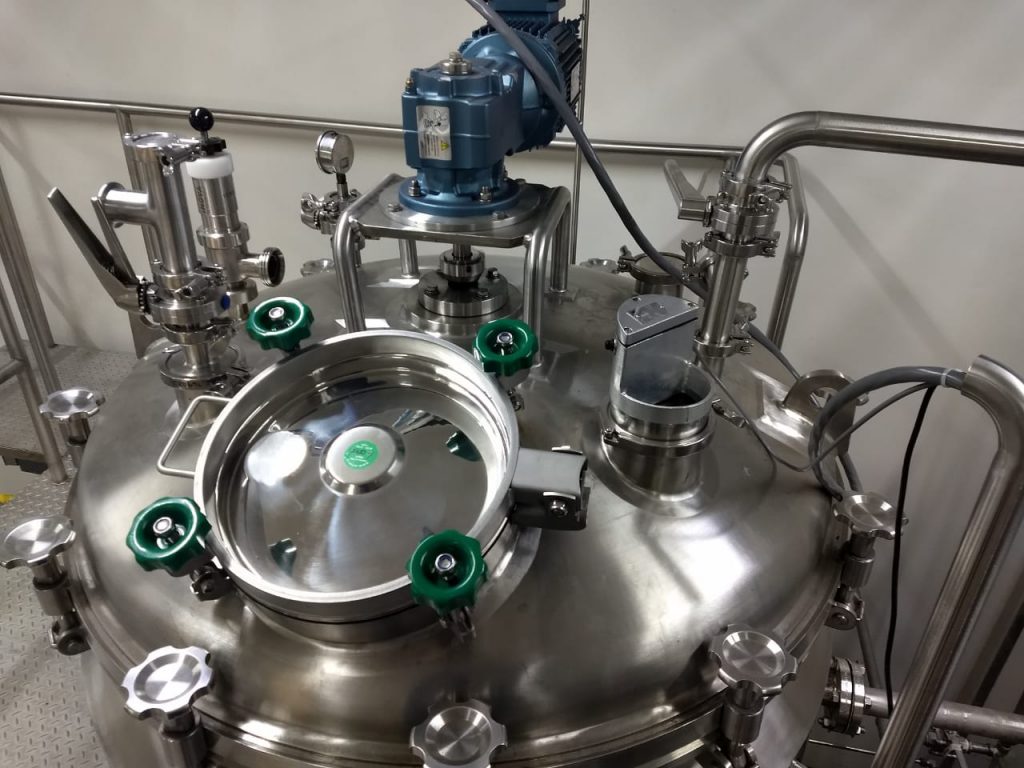
Specialized equipment for biotechnological processes, fermentations and cell cultures with total control of bioprocess variables.

Benefits

Functionality / Applications

  • Biotechnology, cell biology, pharmaceutical production.

  • Controlled fermentation for food and beverages.

Types of industrial bioreactors

  • The medium and microorganisms/cells are loaded at the beginning.
  • Nothing is added or removed until the process is complete.
  • Simple control.
  • Widely used in fermentation, basic cultures and batch production.
  • It begins with a batch culture.
  • Then the substrate is added in a controlled and progressive manner.
  • It allows for growth control, avoidance of inhibitions, and increased productivity.
  • It is the most commonly used type in industrial biotechnology (enzymes, proteins, drugs).
  • Constant feeding and continuous extraction of the product.
  • They maintain the crop in a steady state.
  • High productivity and efficiency.
  • Widely used in large-scale bioprocesses and continuous fermentations.
  • The most common ones in the industry.
  • They use mechanical agitators.
  • Ideal for homogeneous mixtures and precise control.
  • They don't have agitators.
  • Mixture achieved by aeration.
  • Common in biomass production and aerobic crops.
  • Circulation generated by differences in air density.
  • Lower shear stress.
  • Ideal for sensitive cultures (animal or plant cells).
  • They separate biomass and product through filtration.
  • Widely used in water treatment and continuous bioprocesses.
  • They support immobilized microorganisms.
  • High cell density.
  • Common in specialized fermentations and residual bioprocesses.