
Industrial Kettles
Industrial Stainless Steel Cooking Pots | Uniform and Efficient Cooking
Las marmitas de Falco están diseñadas para procesos donde se requiere cocción uniforme, calentamiento controlado y mezcla constante. Fabricadas con tecnología avanzada en transferencia de calor, garantizan mayor rendimiento energético y calidad del producto final.
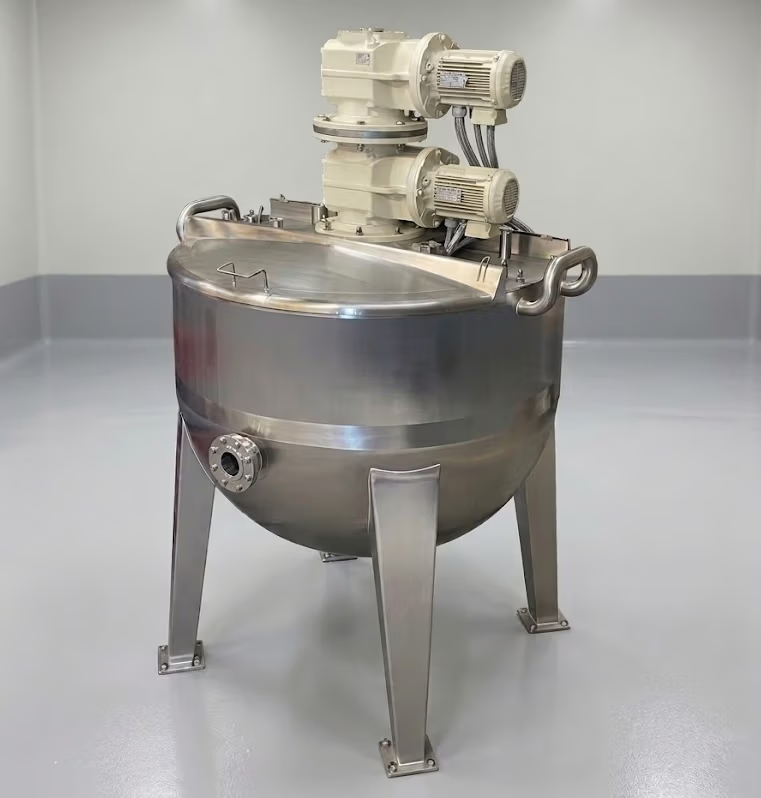

Main features
- Construction in 304L or 316L stainless steel
- Chaqueta de vapor o aceite térmico
- Single or double stirring system
- Sanitary drain with butterfly or ball valve
- Optional safety covers and peepholes
- Capacities from 50 L to 3,000 L
Benefits
Prevents burning and overheating of the product.
Uniform cooking thanks to highly efficient jackets.
Easy to clean thanks to its sanitary internal finish.
Significant reduction in time and energy.
Ideal for delicate food processing.
Applications
Sauces
Purees
Dairy
Cosmetic creams
Candy and confectionery
Bases alimentarias
Types of industrial kettles
1. Direct heat kettles
Heat is applied directly to the bottom of the container using burners or heating elements. These are more economical, heat up quickly, and are suitable for processes where it doesn't matter if the temperature isn't perfectly uniform.
Common uses:
Simple sauces, broths, water, liquid mixtures without risk of burning.
Disadvantages
They can create hot spots that burn the product.
2. Indirect heat cooking pots (with a jacket or double shirt)
The container has a "jacket" through which steam, hot water, or thermal oil circulates. This provides more uniform heating , prevents burns, and allows for more precise control.
Common uses:
Dairy products, thick sauces, jams, delicate products, and dense foods.
3. Steam kettles
They use steam as a heating medium (through the jacket). They reach high and very stable temperatures, ideal for large industrial processes.
Advantages:
- Uniform heating
- Excellent energy efficiency
- Fine temperature control
Uses:
Large food industry (jams, soups, mass cooking).
4. Electric cooking pots
They use electric heating elements to warm the jacket or body. They are clean, easy to install, and do not require a boiler.
Advantages:
- Uniformity
- Ideal for medium-sized industrial kitchens
- Easy maintenance
Uses:
Restaurants, production kitchens, bakeries, hotels.
5. Gas-fired cooking pots
Gas heats the bottom or the jacket. They are powerful, fast, and economical to run, although less uniform than steam heaters.
Uses:
Processes that require rapid heating.
6. Tilting/Tipping Kettles
They allow you to turn the pot upside down to empty the product effortlessly. Very common in medium and high production.
7. Stirring kettles
They have internal agitators that mix the product while it is being heated.
They prevent sticking or burning and provide total uniformity.
Variants:
- Paddle agitation
- Scratching type agitation
- Planetary unrest
- Variable agitation (reversing rotation)
Uses:
Creams, custards, cajeta, fillings, thick sauces, candies.
8. Pressure cookers (culinary autoclave type)
They can cook above 100°C thanks to the pressurized seal.
Saves time and provides greater sanitization.
9. Vacuum kettles
They allow cooking at lower temperatures, preventing oxidation and loss of aroma. Used in:
- Sweets
- Concentrates
- Fruits in syrup
- Extracts