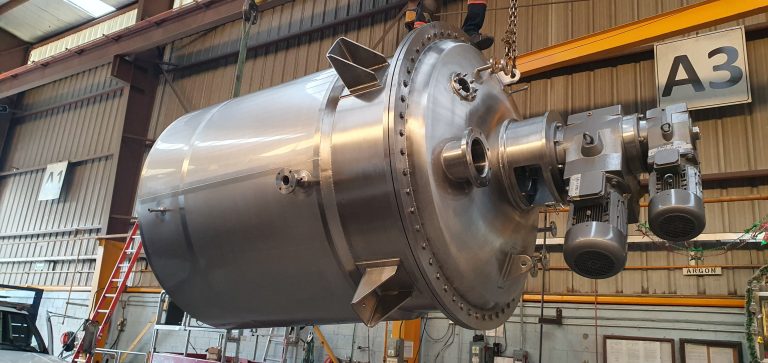
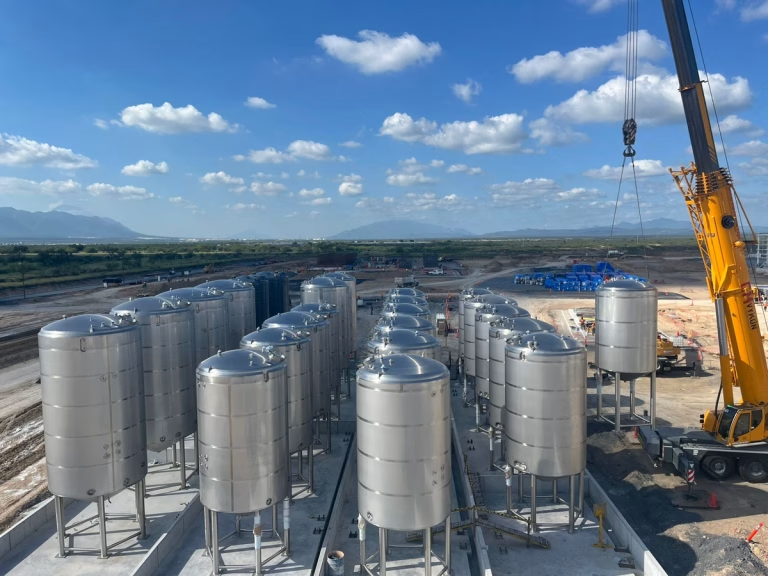
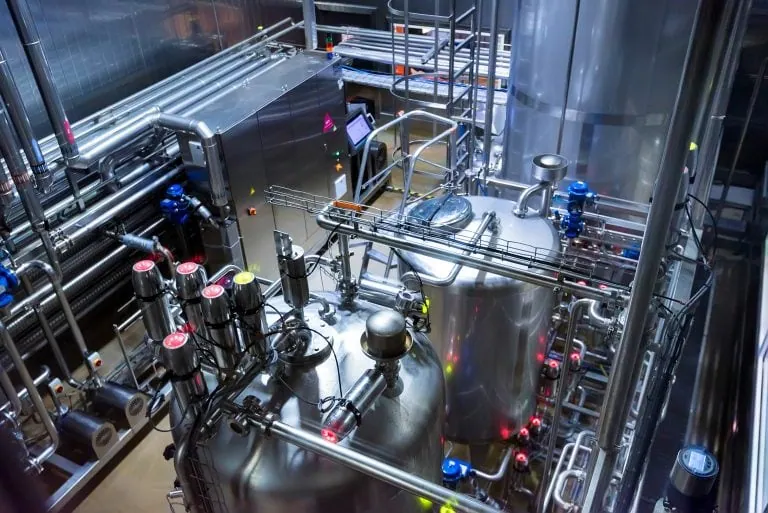
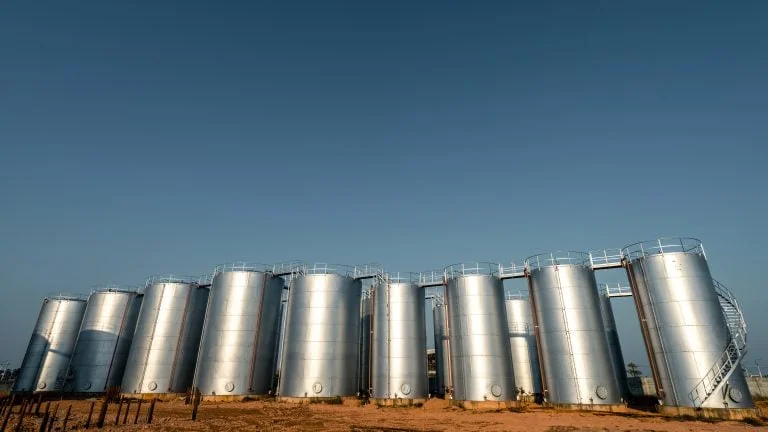
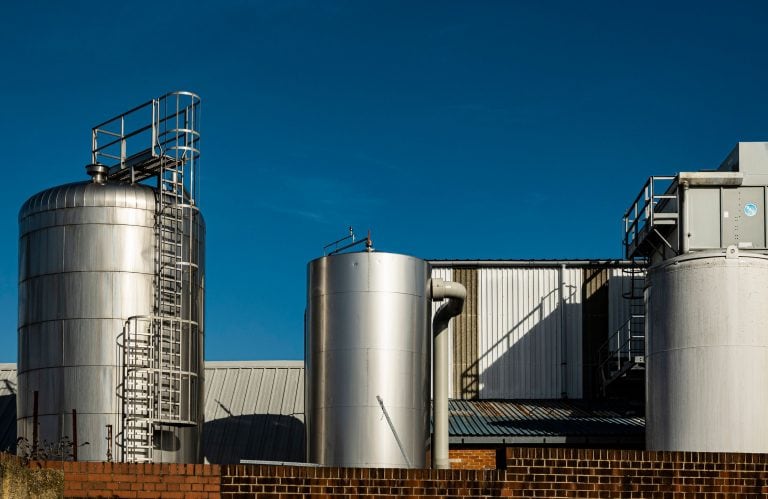
In the pharmaceutical industry, material selection is not just a matter of cost, but of sanitary safety, regulatory compliance, and equipment service life. Tanks, reactors, and piping systems must withstand aggressive cleaning processes while ensuring that no particles migrate into the final product.
Although they appear identical visually, the chemical differences between 304 and 316L stainless steel are critical. Below, we analyze which is the best investment for your plant.
Chemical Composition: The Power of Molybdenum
The main difference lies in the alloy composition. While 304 is the standard for general industry, 316L introduces one key element: molybdenum.

The presence of molybdenum in 316L provides superior resistance to pitting corrosion, especially in environments containing chlorides or salts, which are common in pharmaceutical solutions.
¿Por qué el sufijo “L” es vital en procesos farmacéuticos?
316L stainless steel (where the "L" stands for Low Carbon) has a reduced carbon content. This is essential during the fabrication of industrial equipment such as that manufactured by Falco Latino for one reason: welding.
Cuando el acero se calienta para soldar, el carbono puede precipitarse en los bordes de grano, provocando “sensibilización” y haciendo que el área soldada sea vulnerable a la corrosión. Al usar 316L, este riesgo se elimina, garantizando que las juntas de los tanques sean tan resistentes como las paredes mismas.
Corrosion Resistance and CIP/SIP Cleaning
Clean-In-Place (CIP) and Sterilize-In-Place (SIP) systems use aggressive chemical agents and high-pressure steam.
- 304 Stainless Steel: Excellent for purified water and low-reactivity solutions. However, it may experience corrosion if exposed for extended periods to strong acids or saline solutions.
- 316L Stainless Steel: Es el estándar “Gold” para la farmacéutica. Soporta mejor los ataques químicos de agentes desinfectantes y previene la contaminación cruzada gracias a su estabilidad química.
Surface Roughness and Electropolishing
Beyond the type of stainless steel, surface finish is mandatory in the pharmaceutical industry. Equipment manufactured from 316L stainless steel is commonly subjected to electropolishing processes to achieve a surface roughness (Ra) of less than 0.5 µm.
This prevents bacteria from settling in microscopic surface irregularities, making complete sterilization of the equipment possible.
Which One Should You Choose?
- Choose 304 Stainless Steel if: Your process involves non-corrosive products, dry solid storage, or support infrastructure that does not come into direct contact with the active pharmaceutical ingredient.
- Choose 316L Stainless Steel if: You are manufacturing reactors, mixing tanks, liquid transfer systems, or any equipment that must comply with FDA validations and international biosafety standards.
At Falco Latino, we specialize in manufacturing stainless steel equipment that meets the highest welding and finishing standards. Properly designed equipment today is a guarantee of compliance and maintenance savings tomorrow.