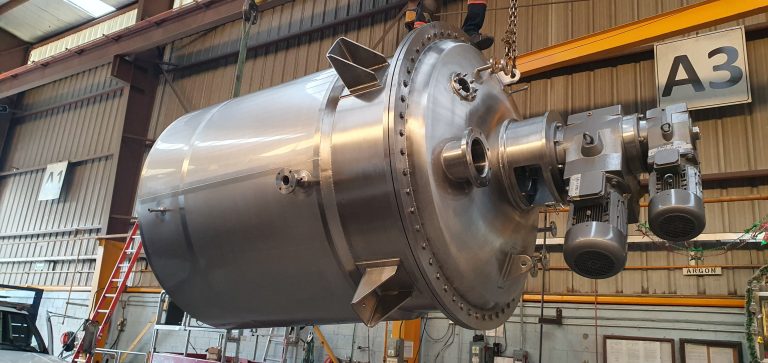
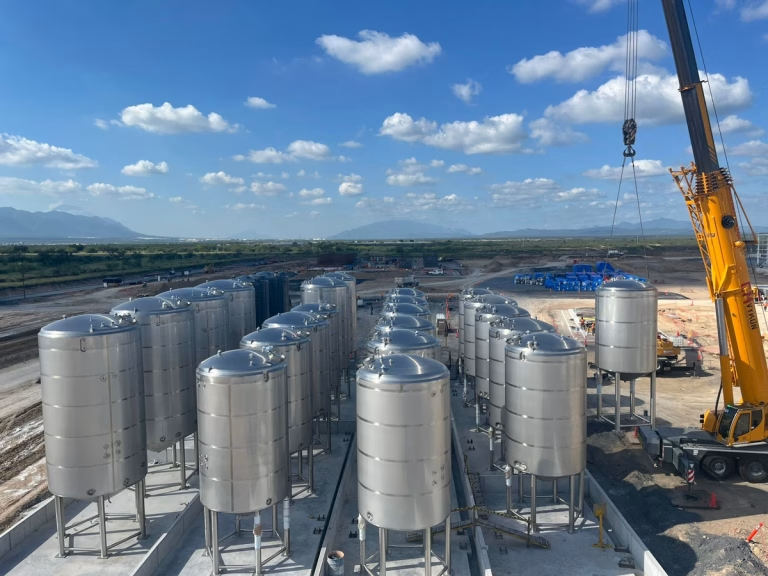
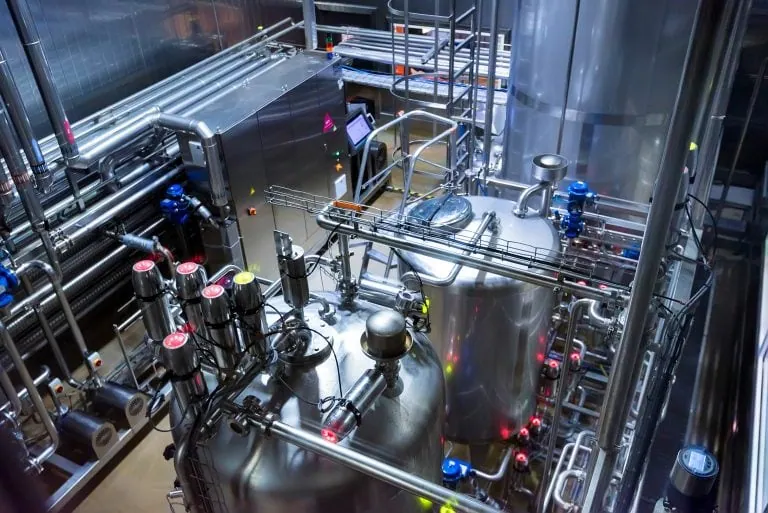
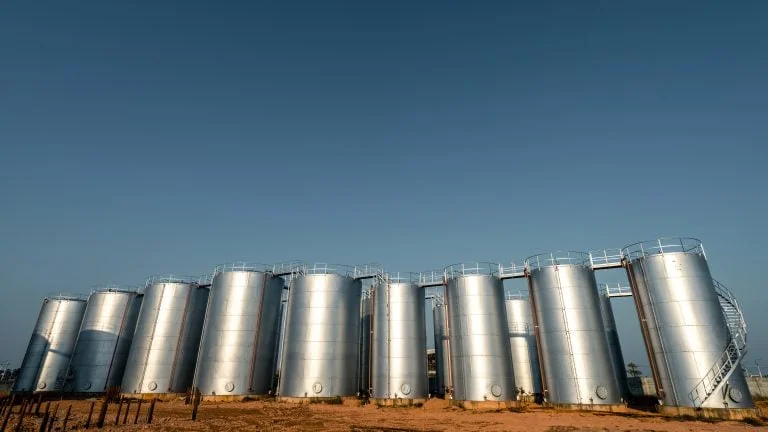
In the industrial sector, a storage tank is not simply a container; it is a critical asset that must ensure material integrity, personnel safety, and operational continuity. Failure to comply with international standards not only creates legal risks but can also result in catastrophic failures.
For companies pursuing engineering excellence, such as Falco Latino, designing and manufacturing equipment in accordance with ASME and API codes is the foundation for technical quality. Below, we break down the fundamental requirements of these standards.
1. ASME Section VIII Code: Pressure Vessels
When a tank is designed to operate at an internal or external pressure greater than 15 psi (1.03 bar), it must comply with the ASME Boiler and Pressure Vessel Code (BPVC), specifically Section VIII, Division 1.
Key ASME Requirements:
- Material Traceability: Every stainless steel plate used must be accompanied by a Mill Test Report (MTR) certifying its origin and mechanical properties.
- Wall Thickness Calculations: The design considers the Maximum Allowable Working Pressure (MAWP) and a corrosion allowance to determine the safe wall thickness.
- Certified Welding: Welders must be qualified under ASME Section IX, and weld joints must pass Non-Destructive Testing (NDT) such as radiographic or ultrasonic inspection.
2. API 650 and API 620 Standards: Fluid Storage
For tanks operating at atmospheric pressure or very low pressures (common in the food, chemical, and petroleum industries), the American Petroleum Institute (API) establishes the design requirements.
API 650: The Standard for Atmospheric Storage Tanks
This is the most widely used standard for welded steel tanks storing liquids at atmospheric pressure.
- Bottom and Roof Design: It specifies bottom slopes and roof types (fixed or floating) according to the volatility of the stored product.
- Hydrostatic Testing:Filling the tank with water is mandatory to verify that there are no leaks or structural deformations before commissioning.
API 620: Low-Pressure Storage Tanks
This standard applies to larger tanks operating at a maximum pressure of 15 psi and temperatures not exceeding 120°. It is ideal for processes requiring a tighter seal than that provided by the API 650 standard.
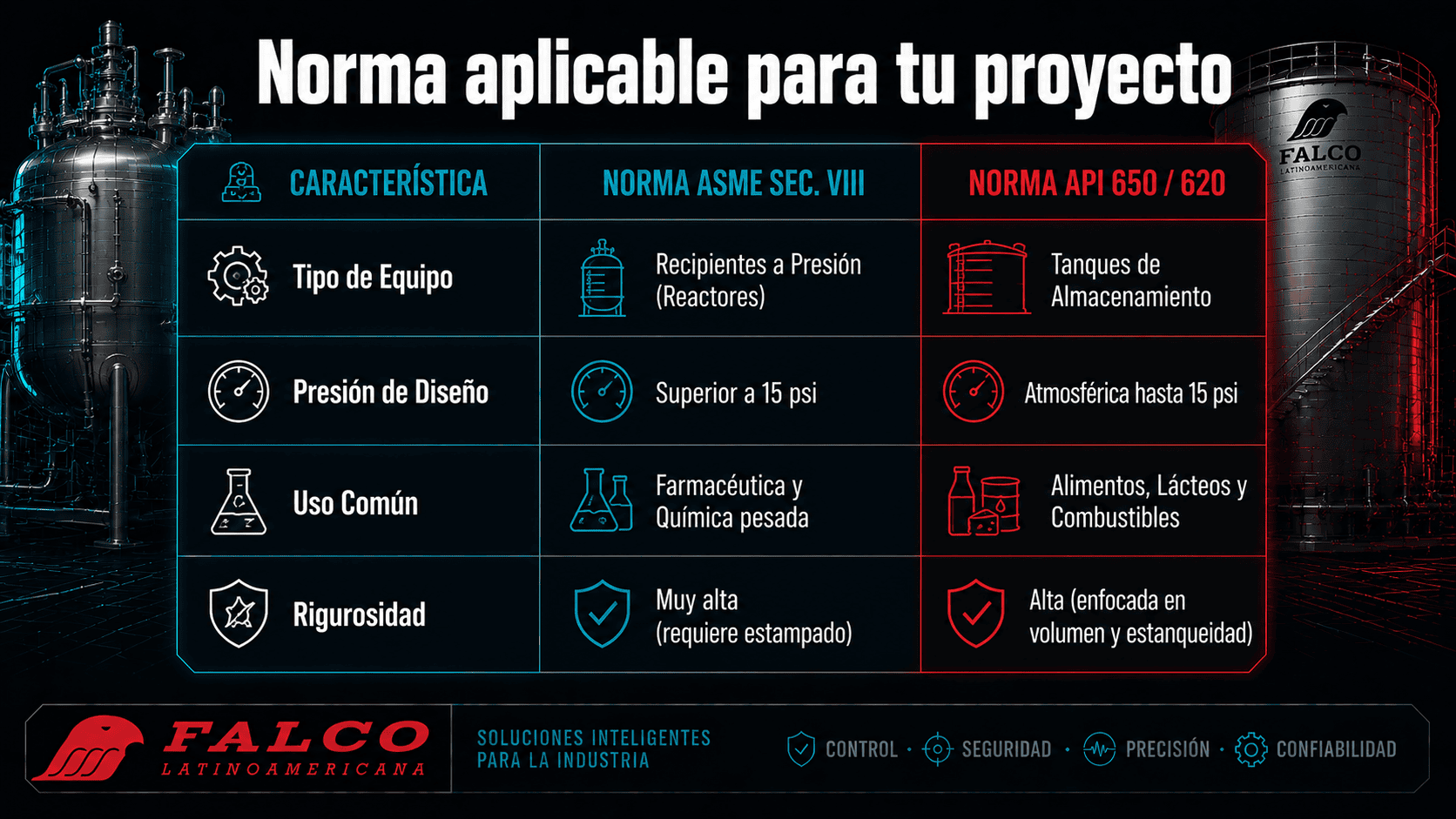
3. Comparison:
4. Quality and Inspection Testing (Non-Destructive Testing)
To be considered safe, a tank must undergo a series of validation procedures during its fabrication at Falco Latino:
- Liquid Penetrant Testing (PT): Used to detect surface porosity or cracks in welds.
- Industrial Radiographic Testing (RT): Used to inspect the internal integrity of welded joints.
- Visual Testing (VT): Performed by certified inspectors to verify sanitary finishes.
- Vacuum Testing: Essential for tanks equipped with heating or cooling jackets.
Safety as an Investment
Choosing a tank manufactured in accordance with ASME or API standards ensures that the equipment has been engineered to withstand the most demanding operating conditions. At Falco Latino, we integrate these standards from the conceptual engineering stage through final installation, ensuring that your facility complies with all applicable regulations and safety audits.
Technical Note: Operating non-certified equipment in regulated industries may invalidate insurance policies and jeopardize sanitary operating licenses.
Do you need a tank with a specific certification?
Our engineering team can advise you on regulatory compliance for your next project.